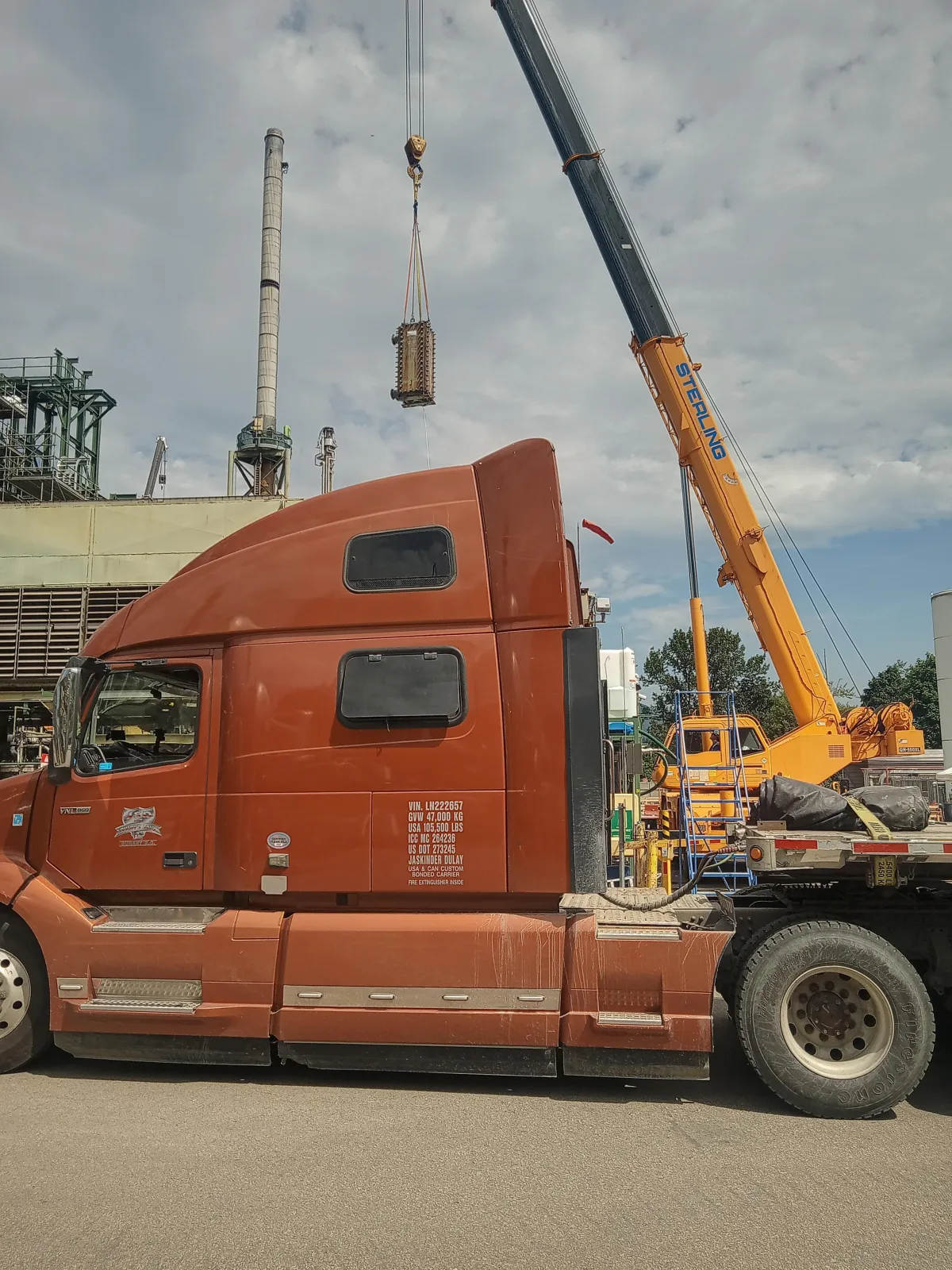
Why Construction Deliveries Fail — Even When the Carrier “Did Everything Right”
Construction freight doesn’t fail because trucks can’t move.
It fails because job sites are not controlled environments.
Across North America, contractors and project managers are seeing the same issue: even when a carrier arrives on time, with the correct equipment and paperwork, deliveries still break down—leading to downtime, rehandling, and schedule disruption.
This article explains where construction deliveries actually fail, and how BN Dulay Trucks plans differently to reduce job-site risk in unstable market conditions.
The Reality of Construction Logistics
Unlike dock-to-dock freight, construction deliveries involve:
Changing site conditions
Limited staging space
Tight coordination with crews and equipment
Zero tolerance for missed windows
What appears to be a simple flatdeck or curtain-side delivery often depends on factors beyond the road itself.
This is where construction logistics typically break down.
Failure Point #1: Site Access Is Assumed, Not Confirmed
One of the most common failure points occurs before unloading even begins.
Typical site access issues include:
Narrow access roads unsuitable for tractor-trailers
Temporary closures or detours
Weight or height restrictions added mid-project
No safe turn-around or laydown area
At BN Dulay Trucks, we verify site access conditions—not just addresses—before confirming construction deliveries.
This helps prevent rejected loads, unsafe unloading, and last-minute rescheduling.
Failure Point #2: Delivery Windows Don’t Match Site Reality
Construction sites operate on sequencing, not static schedules.
Common disconnects we see include:
Delivery windows overlapping crane or crew availability
Materials arriving before the site is ready
Upstream trade delays pushing unloads downstream
Our dispatch team coordinates arrival timing with site realities, not just pickup appointments—reducing idle time and site congestion.
Failure Point #3: Equipment Matches the Load — But Not the Site
Choosing equipment based only on the freight creates avoidable risk.
Examples include:
Flatdecks sent to sites without offloading equipment
Curtain-side trailers used where side access is blocked
Over-length equipment routed into tight urban sites
At BN Dulay, equipment selection considers both the load and the unloading environment.
This reduces dwell time, improves safety, and increases the likelihood of first-attempt delivery success.
Failure Point #4: On-Site Communication Breakdowns
Many construction delivery issues escalate due to communication gaps:
Drivers arrive without clear site instructions
Dispatch isn’t aware of real-time site changes
Updates happen after problems arise
We emphasize proactive communication between dispatch, drivers, and site contacts, especially on active job sites where conditions change daily.
Failure Point #5: No Contingency Planning
Construction projects rarely unfold exactly as planned.
When issues arise, outcomes depend on:
Dispatch depth
Fleet availability
Ability to adjust timing or equipment
As a direct carrier with its own fleet, BN Dulay plans construction deliveries with room for disruption, not just ideal conditions.
How BN Dulay Helps Reduce Construction Delivery Risk
Contractors working with BN Dulay typically benefit from:
Early site access review
Equipment matched to unloading conditions
Realistic delivery timing
Dispatch teams familiar with active job sites
Clear communication before issues escalate
In construction logistics, predictability matters more than perfection.
When BN Dulay Trucks Is Typically a Fit
BN Dulay Trucks is often engaged for construction deliveries involving:
Flatdeck, Conestoga, or curtain-side equipment
Active job sites with access or timing constraints
Urban, infrastructure, or phased projects
Coordinated deliveries involving cranes or crews
We’re also upfront when a project requires a different approach or timeline—because preventing site disruption matters more than booking volume.
Common Planning Questions (Construction Teams)
Why do construction deliveries fail even when trucks arrive on time?
Because site access, unloading readiness, and coordination often matter more than transit time.
Does BN Dulay review site conditions in advance?
Yes. We review access, space, and unloading conditions early to reduce delivery risk.
Should equipment be selected only based on the load?
No. Equipment must also match site layout and unloading requirements.
Can BN Dulay adapt to mid-project site changes?
Established fleet capacity and dispatch depth allow us to adjust when conditions change.
A Practical Next Step (No Pressure)
If you’re planning a construction delivery and want to:
Confirm site access suitability
Match equipment to unloading conditions
Align delivery timing with site operations
Request a quote or discuss capacity, and our dispatch team will review the details and let you know—clearly—whether we’re the right fit.
👉 https://www.bndulaytrux.com/quote-request-form/

