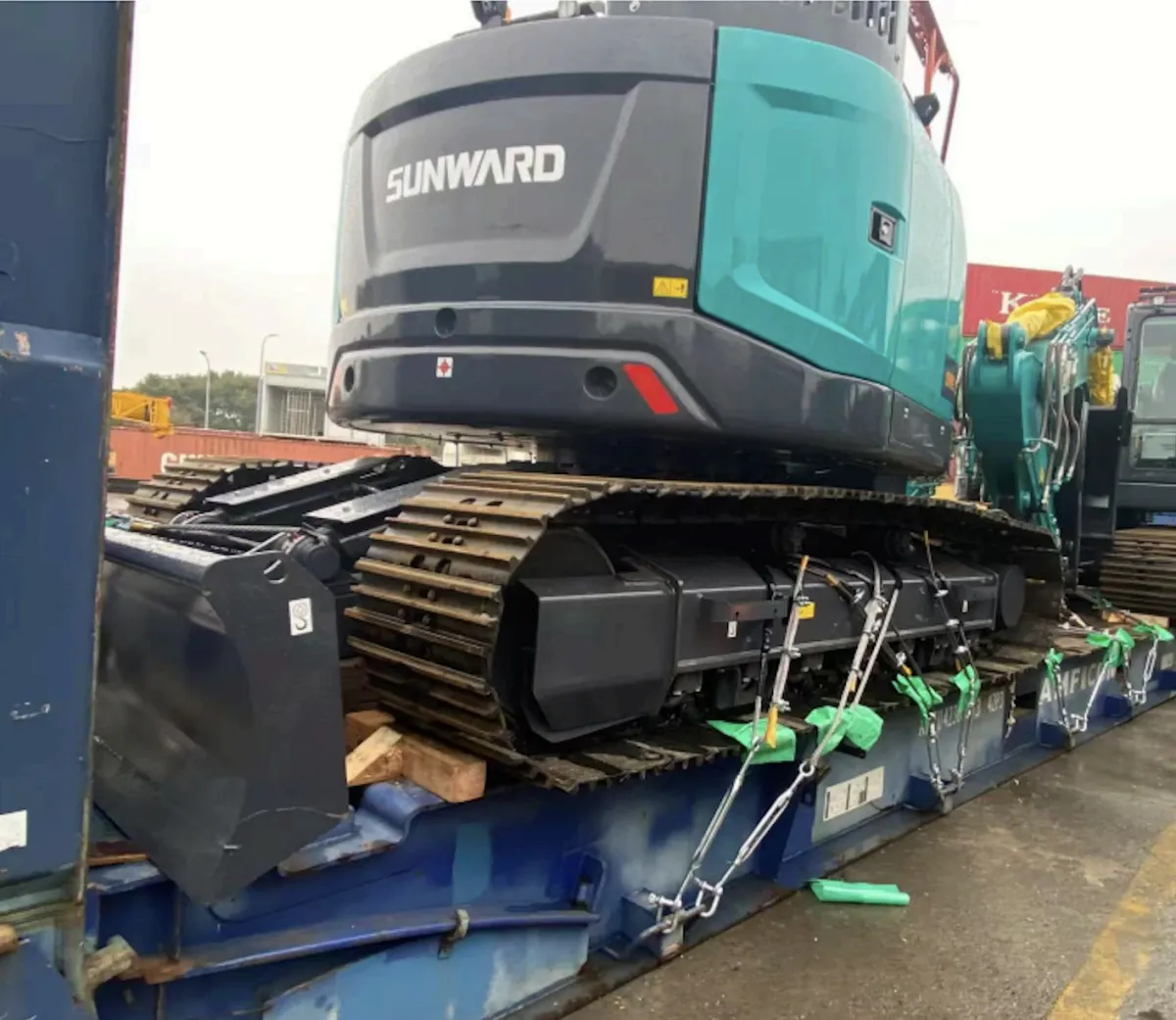
Flat Deck vs. Lowbed Trailer: Which One Does Your Equipment Need?
Flat Deck vs. Lowbed Trailer: Which One Does Your Equipment Need?
Moving heavy equipment starts with selecting the right trailer. While flat deck and lowbed trailers are both commonly used in commercial transportation, each serves a different purpose.
Choosing the appropriate trailer depends on the equipment being transported, its dimensions, weight, and how it will be loaded and unloaded. Understanding the differences can help improve efficiency and ensure the transportation method matches your project's requirements.
This guide explains when flat deck and lowbed trailers are typically used and the factors that influence trailer selection.
What Is a Flat Deck Trailer?
A flat deck trailer has an open platform that allows freight to be loaded from the sides, rear, or above.
Flat decks are commonly used for transporting:
Structural steel
Lumber
Large pallets
Generators
Containers
Forklifts
Smaller construction equipment
Industrial materials
Because the trailer is open, loading with a crane or forklift is often straightforward, making flat decks a versatile option for many commercial shipments.
What Is a Lowbed Trailer?
A lowbed trailer has a lower deck height than a standard flat deck.
This design allows larger or heavier equipment to be transported while providing additional clearance and stability.
Lowbeds are commonly used for:
Excavators
Bulldozers
Wheel loaders
Asphalt rollers
Motor graders
Large agricultural equipment
Heavy industrial machinery
The lower platform helps accommodate equipment that may exceed standard height limits when transported on a conventional trailer.
Flat Deck vs. Lowbed
FeatureFlat DeckLowbedLoadingSide, rear or overheadRear rampsBest ForMaterials and smaller equipmentHeavy machineryHeight ClearanceStandardLower deck for taller equipmentHeavy EquipmentSome equipmentIdeal for larger equipmentCommon IndustriesConstruction, manufacturing, logisticsConstruction, mining, infrastructure
How Is the Right Trailer Selected?
Several factors are reviewed before selecting a trailer, including:
Equipment dimensions
Operating weight
Ground clearance
Loading method
Pickup location
Delivery location
Route considerations
Every shipment is evaluated individually because no single trailer is suitable for every project.
BN Dulay Insight
One of the most common questions we receive is, "Do I need a lowbed?" In many cases, customers are surprised to learn that trailer selection depends on the equipment's overall dimensions—not just its weight.
Can Heavy Equipment Travel on a Flat Deck?
Yes, depending on the equipment.
Smaller machines such as compact loaders, forklifts, and certain skid steers may be transported on a flat deck when their dimensions and weight fall within appropriate limits.
Larger machinery often requires a lowbed trailer to provide additional clearance and stability during transport.
When Is a Lowbed the Better Choice?
A lowbed trailer is often preferred when equipment:
Is taller than standard transportation limits
Has significant operating weight
Requires additional stability
Benefits from easier loading using ramps
Choosing the appropriate trailer helps support safe transportation and efficient loading.
Industries That Commonly Use Flat Deck and Lowbed Transportation
Businesses across many industries rely on specialized transportation, including:
Construction
Municipal Infrastructure
Mining
Forestry
Agriculture
Manufacturing
Energy
Utilities
Different projects require different transportation solutions based on the equipment involved.
Frequently Asked Questions
Can a skid steer be transported on a flat deck?
In many cases, yes. Transportation depends on the machine's size, weight, and loading requirements.
Does every excavator require a lowbed?
Not always. The appropriate trailer depends on the excavator's dimensions and operating weight.
Which trailer is better for industrial machinery?
The answer depends on the machinery itself. Dimensions, weight, loading requirements, and destination all influence trailer selection.
Can BN Dulay help determine which trailer is needed?
Yes. Reviewing the equipment specifications and project details allows the most suitable transportation option to be recommended.
Choosing the Right Transportation Solution
Selecting the right trailer is an important part of any transportation project. Whether the shipment involves construction equipment, industrial machinery, or commercial freight, understanding the equipment before transportation begins helps determine the most appropriate solution.
At BN Dulay Trux, every transportation project starts with reviewing the equipment and project requirements so the right trailer can be selected from the beginning.
If you're planning an upcoming shipment, our team can help determine the transportation solution that best fits your equipment and destination.

